Cat and Dog Care Logo Design
A Clean Monoline That Breathes—Not a Busy Afterthought
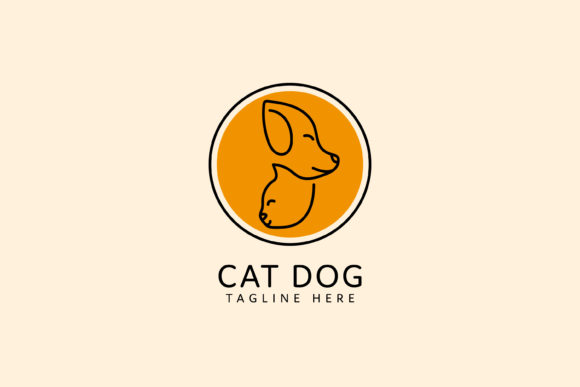
First glance at the Cat and Dog Care Logo Design tells you it’s made for clarity, not clutter. Two heads—one feline, one canine—interlocked in a gentle, balanced monoline silhouette. No heavy outlines, no ornate flourishes, no forced cuteness. It feels calm, intentional, and quietly professional. That matters more than you’d think when stitching on a baby onesie or embroidering a boutique apron for a pet-sitting business. This isn’t a cartoon; it’s a quiet nod to care, companionship, and consistency.
Where It Shines: Real Projects, Not Just Pixels
I tested this design as the centerpiece for a custom embroidered tote bag—cotton canvas, medium-weight, meant for a local dog-walking service launching their first branded merchandise. The monoline structure translated beautifully: clean stitch paths, minimal jump threads, and enough negative space to let the fabric breathe. On a sweatshirt? Yes—especially with a light stabilizer and moderate stitch density. On a tea towel? Even better. The simplicity holds up after repeated washes without fraying or blurring.
It works just as well for smaller-scale handmade products: a stitched patch for a pet foster volunteer’s jacket, a subtle chest embroidery on a linen baby blanket, or a single-line motif on a holiday kitchen towel set. Because it’s vector-based (EPS), resizing stays crisp—no pixelation when scaling down for a cap front or up for a pillow cover. And since it’s monoline, it avoids the trap of dense fill stitches that can stiffen delicate fabrics or overwhelm lightweight cottons.
Where to Pause—and Why
This design is forgiving, but not magic. On stretchy knit t-shirts? Proceed with caution. Monolines can distort if hooping tension isn’t even or if stabilizer choice underestimates fabric give. I recommend a light tear-away + cut-away hybrid for anything with spandex or jersey content. On dark fabric? Test thread contrast early—light gray or soft cream thread reads more elegantly than stark white, especially for a “care”-focused brand. And avoid cramming it into tiny hoops (<3”) unless you’re confident in your machine’s fine-stitch accuracy. Those subtle ear curves and shared jawline need breathing room.
Also: while the design itself has no lettering, don’t assume it’ll pair seamlessly with custom text without testing spacing and alignment. If you’re building a full logo lockup (e.g., “Paws & Peace Pet Care” beneath the icon), mock it up in your embroidery software first—check how the monoline weight compares to your chosen font’s stroke thickness.
What It Adds to Your Finished Product—Beyond Aesthetics
Customers notice subtlety before they name it. A clean, balanced Cat and Dog Care Logo Design signals intentionality—not just “I slapped a pet image on this.” That builds trust, especially for small businesses where handmade presentation equals credibility. On an Etsy listing for personalized pet-sitter gifts, this logo elevates a simple embroidered keychain from “cute” to “thoughtfully made.” On nursery decor? Its calm rhythm soothes rather than overstimulates—a real win for baby embroidery.
It also supports brand consistency across product types. Use it on a patch, then scale it for a tote, then simplify further for a minimalist tea towel stamp—it retains recognizability without needing redesign. That flexibility saves time for craft business owners juggling multiple SKUs, and it keeps digital embroidery file collections feeling cohesive, not chaotic.
Practical Notes Every Embroiderer Should Run Through
- Always test on scrap fabric first—especially if using textured weaves, terrycloth, or blends. Monolines reveal inconsistencies faster than fill-heavy designs.
- Check thread color contrast on both light and dark backgrounds before committing to a batch. A single-thread-color version often reads cleaner than multi-color attempts here.
- Review stitch density in your embroidery software. Monolines can run too fast or too slow depending on machine settings—adjust speed and tension to avoid skipped stitches or thread breaks.
- Confirm hoop size compatibility before digitizing or purchasing. While the EPS is scalable, your machine’s maximum hoop area determines practical limits.
- Inspect small details at actual stitch size—those connecting lines between cat and dog heads must remain distinct, not merge into a blob.
- Test black-and-white mockups to assess visual weight. If it disappears on a busy fabric print, consider a subtle satin stitch outline or shadow effect.
- Use proper stabilizer—a lightweight cut-away prevents puckering on stable fabrics; a fusible tear-away adds control on knits.
- Verify licensing terms before selling finished items or bundling the design into digital embroidery file packs. As a Graphics asset in the Logos category, its commercial use rights matter for Etsy sellers and craft fair vendors.
Final Thought: Simplicity With Substance
The Cat and Dog Care Logo Design doesn’t shout. It settles in—clean, calm, and capable. It’s the kind of embroidery file that looks equally at home on a vet clinic’s staff apron, a handmade pet memorial pillow, or a limited-run holiday tote for a rescue nonprofit. Its strength isn’t in complexity, but in restraint: every curve serves purpose, every line invites recognition, and every stitch feels intentional. For designers, crafters, and small shop owners who value clarity over clutter, this is less of a logo—and more of a quiet, reliable collaborator.