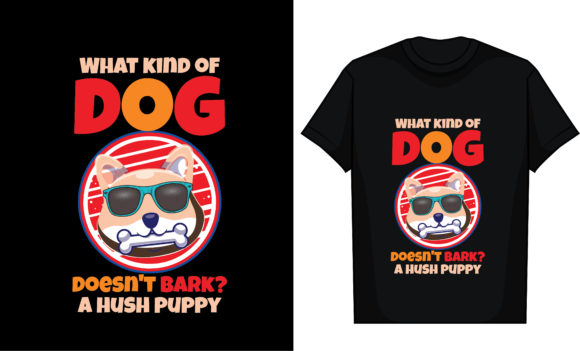
What Kind of Dog Doesn’t Bark a Hush
As someone who’s stitched hundreds of designs across apparel, home goods, and boutique merchandise, I opened What Kind of Dog Doesn’t Bark a Hush expecting clever wordplay—and got something more: a quiet, confident design that leans into wit without shouting. It’s not loud or cartoonish; it’s dry, warm, and subtly layered—like a well-worn dog sweater or a handwritten note tucked in a gift bag. That tone matters deeply when you’re choosing embroidery files for real projects—not just digital previews.
A Tote Bag Test: Where Personality Meets Practicality
Last week, I prepped a custom canvas tote for a local pet rescue’s volunteer appreciation day. The brief? Friendly but not cutesy, memorable but not gimmicky. What Kind of Dog Doesn’t Bark a Hush landed perfectly—its clean layout fits neatly in a 4×4 hoop, the lettering has generous spacing, and the implied “Hush” feels like an inside joke between dog lovers. When stitched on medium-weight natural canvas with matte cotton thread, the phrase read clearly at arm’s length—but more importantly, it invited a pause, a smile, a second look. That’s rare in text-based embroidery.
How It Performs Across Real Embroidery Surfaces
What Kind of Dog Doesn’t Bark a Hush shines on stable, low-stretch fabrics: sweatshirt fleece, twill tote bags, structured aprons, and cotton tea towels. Its moderate height and open letterforms breathe well under satin and fill stitches—no dense crowding, no tiny serifs begging to vanish mid-stitch. On baby onesies? Yes—but only with lightweight stabilizer and gentle tension. The phrase isn’t overly long, so it avoids awkward wrapping on curved surfaces like caps or pillow rolls. As a machine embroidery design, it’s forgiving for beginners yet refined enough for boutique branding.
Where it needs thoughtful handling: ultra-thin fabrics (think voile or lightweight rayon), heavily textured knits, or dark garments where subtle gray or beige thread tones might fade visually. If your version includes fine decorative accents—say, a tiny paw print dotting the “i”—test those separately. They’ll hold up on stable cotton but risk distortion on stretchy jersey or terrycloth.
Why This Design Builds Trust—Not Just Cuteness
Customers don’t buy slogans—they buy resonance. What Kind of Dog Doesn’t Bark a Hush lands as sincere, not sarcastic. That nuance translates directly to perceived value: a hand-embroidered kitchen towel with this phrase feels intentional, not mass-produced. For Etsy sellers or small shop owners, that authenticity supports pricing confidence. A $38 embroidered linen napkin set with this design reads as curated, not generic. And because it avoids overused tropes (bones, paw prints, “Good Boy” banners), it stands out in crowded digital marketplaces—especially paired with strong printable mockups showing real fabric texture and thread sheen.
Design Notes Every Embroiderer Should Check Before Stitching
- Test on scrap first—especially if using blended threads or non-standard stabilizers. Text-heavy embroidery can shift unexpectedly on loosely woven fabrics.
- Review stitch density in your embroidery software. If the file includes tight fill areas within letters (like the counter of the “a” or “o”), consider simplifying or adjusting density for breathability on wearable items.
- Confirm hoop size compatibility. While it fits comfortably in a 4×4, double-check whether the full phrase clears a 5×7 border if you plan to add a small icon or name personalization later.
- Inspect small details at actual stitch scale—not just zoomed-in vector previews. What looks crisp on screen may blur when rendered in 40-weight polyester thread.
- Try black-and-white mockups. Does the phrase retain legibility on heather gray, oatmeal, or navy? Contrast matters more than charm when stitching.
- Match stabilizer to end use. Tear-away works for tote bags and tea towels; cut-away is safer for baby embroidery or anything going through repeated washing.
- Verify licensing scope. Since this is listed as a T-Shirt Design and Graphics file, confirm whether commercial embroidery rights are included—especially if you plan to sell finished products or offer it as part of a craft business package.
Where It Fits—and Where It Doesn’t
This isn’t a standalone applique design or a complex multi-layered scene. It’s a focused, typography-forward embroidery file built for clarity and quiet impact. It belongs on personalized gifts (think anniversary sweatshirts for retired service dogs), holiday embroidery (a cozy “Hush” on a winter scarf), nursery decor (framed linen wall art), or small-batch boutique branding (a minimalist logo alternative for a dog-walking service). It does not suit high-detail applications like intricate patches, micro-embroidery on cufflinks, or layered garment collars where space is measured in millimeters.
It also doesn’t try to be everything. There’s no forced trendiness—no neon gradients, no TikTok-ready animation cues. That restraint is its strength. In a landscape flooded with clip-art-style graphics, What Kind of Dog Doesn’t Bark a Hush feels like a designer’s choice, not an algorithm’s suggestion.
Final Thought: Less Is Actually More—Here
If you’re evaluating this as a digital embroidery file for your craft business, ask yourself: does it elevate the product—or just fill space? With What Kind of Dog Doesn’t Bark a Hush, the answer is clear. It adds voice, warmth, and quiet distinction. Whether stitched on a handmade pillow cover or printed as part of a digital product preview, it signals care—not just capability. That’s what turns a simple phrase into a memorable finished product.