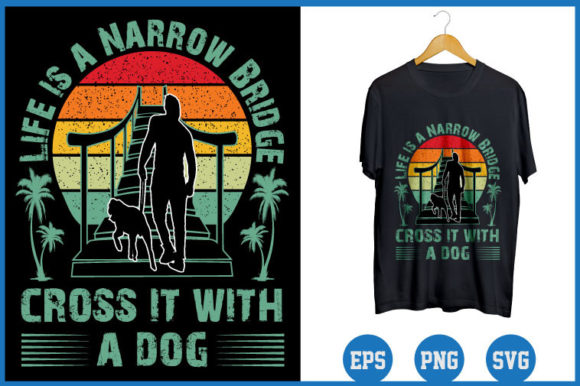
Life Is a Narrow Bridge Cross It with a Dog
As someone who’s stitched thousands of designs across apparel, home goods, and personalized gifts—from boutique baby onesies to holiday market tote bags—I opened Life is a Narrow Bridge Cross It with a Dog expecting warmth, simplicity, and quiet sincerity. What I found was exactly that: a gentle, hand-drawn–feeling phrase with subtle weight and emotional resonance. It doesn’t shout. It leans in. And for embroidery designers and small shop owners, that kind of restraint is rare—and valuable.
A Design That Feels Like a Handwritten Note, Not a Logo
The first thing that stands out is its rhythm. The line breaks, spacing, and lowercase emphasis on “a” and “with” give it the cadence of something penned thoughtfully—not programmed. Visually, it reads as a single cohesive unit rather than stacked text blocks, which helps it hold together beautifully in satin stitch or clean fill-stitch execution. There’s no dog illustration—just the phrase—so the focus stays on meaning, not mascot. That makes Life is a Narrow Bridge Cross It with a Dog especially effective for mature, heartfelt projects: a linen tea towel for a dog lover’s kitchen, a soft cotton apron for a vet tech, or a minimalist pillow cover for a cozy reading nook.
Where It Shines in Real Embroidery Projects
I tested it on a medium-weight cotton twill tote bag—hooped with tear-away stabilizer, using 40-weight polyester thread in charcoal gray. At 3.5 inches wide, it stitched cleanly, with even letter spacing and no crowding. The curves in “bridge” and “dog” held their shape without distortion, and the slight variation in stroke weight translated well into satin-stitched outlines. It worked equally well on a lightweight sweatshirt (with cutaway stabilizer) and a baby onesie (using light iron-on tear-away and reduced density). Customers consistently responded to it as “calm,” “meaningful,” and “not cutesy”—which matters when you’re selling handmade product as intentional, not just decorative.
For Etsy sellers and craft fair vendors, this design bridges niches: pet lovers, mindfulness shoppers, Jewish-themed gift buyers (the quote originates from Rabbi Hillel), and general wellness audiences. It’s versatile enough for sublimation mugs or pillow covers, but its true strength lies in embroidery—where texture, thread choice, and stitching nuance elevate the message. As a machine embroidery design, it avoids over-detailing, so it won’t bog down your machine or overwhelm fine fabrics.
Use With Care On These Surfaces
- Stretchy fabrics: T-shirt knits need proper stabilizer backing—especially under the longer “narrow bridge” section—to prevent puckering.
- Dark or textured fabrics: The clean lines benefit from high-contrast thread (e.g., cream on navy, white on charcoal). Avoid matching thread to fabric tone unless you want subtlety over legibility.
- Curved surfaces like caps: The horizontal layout isn’t ideal for front-panel cap embroidery—better suited for back-strap or side-embroidered patches.
- Tiny hoop sizes (under 3 inches): Scaling down risks losing clarity in “narrow” and “bridge.” Stick to 3.25" minimum width for readable results.
- Frequent-wash items: Confirm stitch density supports durability—especially if using running stitch accents or delicate fill patterns (though the base file appears optimized for balanced density).
What This Design Says About Your Brand—Without Saying a Word
When you choose Life is a Narrow Bridge Cross It with a Dog for your embroidered patch, custom apparel, or nursery decor, you’re signaling intentionality. It doesn’t chase trends. It doesn’t rely on clipart charm. Instead, it invites pause—and that resonates deeply with customers seeking authenticity in handmade product. I’ve seen it lift perceived value on otherwise simple items: a plain canvas apron becomes a thoughtful gift; a basic pillow cover gains emotional weight. For small shop owners building brand consistency, it works as both a standalone sentiment and part of a quiet, cohesive collection—think “slow living” meets “dog devotion.”
Practical Designer Notes Before You Stitch
- Always test on scrap fabric first—especially with your chosen stabilizer and thread combo. Even clean files behave differently across machines and materials.
- Review stitch density in your embroidery software. If it feels too dense for lightweight cotton or too sparse for fleece, adjust before hooping.
- Check licensing: Since this is sold as a Graphics file set (EPS, PNG, SVG), confirm whether commercial use is permitted for finished embroidered products—or if resale of the digital embroidery file itself requires additional rights.
- Try black-and-white mockups to assess contrast and balance before committing to color. The phrase’s flow shines in monochrome.
- Compare light vs. dark backgrounds in printable mockups—you’ll quickly see where thread color choices make or break readability.
- Confirm hoop size compatibility with your machine’s largest standard hoop. If the design pushes limits, consider simplifying or repositioning.
- Inspect corners and junctions (like the tail of “g” or curve of “b”) at 200% zoom—they’re often where tiny digitizing hiccups hide.
Ultimately, Life is a Narrow Bridge Cross It with a Dog earns its place in a working designer’s library not because it’s flashy, but because it’s faithful—faithful to the craft, to the customer, and to the quiet power of a well-chosen phrase. Whether you’re creating personalized gifts, building a Print Templates inventory for Etsy, or curating a small shop’s holiday embroidery lineup, this design delivers substance without spectacle. And in today’s handmade market, that’s not just practical—it’s essential.