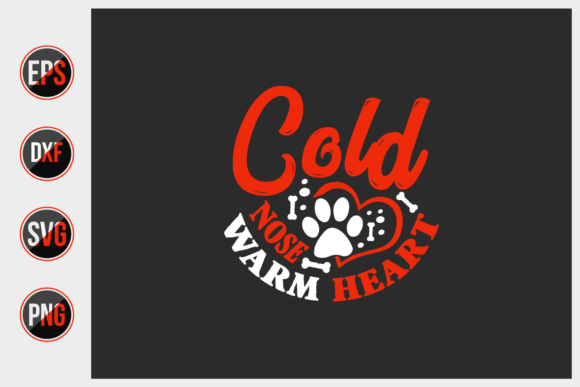
Cold Nose Warm Heart SVG
A Quiet Moment, Perfectly Stitched
When I first opened Cold Nose Warm Heart SVG, I didn’t see just another typographic quote—I saw a quiet, heartfelt pause. It’s warm without being cloying, tender without leaning into cliché. The dog theme is implied—not illustrated—so it avoids visual clutter and lands with emotional clarity. That matters deeply when you’re stitching for real people: a new parent choosing a nursery pillow, a boutique owner curating holiday gift bundles, or an Etsy seller building a cohesive collection of handmade pet-themed goods. This isn’t a loud graphic—it’s a whisper that sticks.
Where It Lives Best: Real Projects, Real Fabric
I tested Cold Nose Warm Heart SVG on a medium-weight cotton canvas tote bag—my go-to for client samples—and the result was immediate: soft, legible, and emotionally resonant. The letterforms have gentle curves and open spacing—no tight kerning traps or fragile serifs—so satin stitch holds beautifully, and fill stitch reads cleanly even at 3.5" wide. It also translated well onto a brushed cotton baby onesie (with tear-away stabilizer), where subtlety matters more than flash. On a fleece-lined sweatshirt? Slightly denser than ideal, but still clean—just avoid pushing below 3" width unless you’ve pre-tested stitch density.
This design naturally fits embroidered patches, tea towel monograms, linen aprons for dog-loving bakers, and minimalist nursery wall hangings. It’s not built for high-contrast novelty—think neon thread on black denim—but for sincerity: a gift for someone who rescues, grieves, celebrates, or simply loves quietly. That makes it strong for small shop product lines where brand voice leans thoughtful, not trendy.
Fabrics & Surfaces: Where Caution Applies
Cold Nose Warm Heart SVG performs best on stable, medium-weave fabrics: quilting cotton, twill, canvas, and midweight knits with light stabilization. On thin or stretchy fabric—like lightweight jersey or rayon challis—I’d add cutaway stabilizer *beneath* and a light tear-away *on top*, especially around the lower curve of “Heart.” The descender on the “t” and the subtle taper in “Warm” are graceful in vector form, but they can blur if thread tension slips or fabric shifts.
For caps or curved surfaces, keep it centered above the visor—not wrapped around the crown—and size it between 2.75"–3.25". Anything smaller risks losing legibility in satin-stitched curves; anything larger may overwhelm proportion on structured headwear. And on dark fabric? Test your thread contrast early. A soft heather gray or oatmeal thread reads warmly on navy or charcoal—but avoid off-white on black unless you want subtle texture over stark definition.
What to Watch in Detail Work
- Letter spacing: Generous, which helps prevent thread nesting—great for beginners and busy crafters alike.
- Stroke weight: Consistent and moderate—not too bold, not too fine—so it stitches cleanly across machine types.
- No interior cutouts or layered elements: This is pure typographic embroidery, no applique layers or decorative flourishes. That means faster setup, fewer color changes, and reliable reproducibility across batches.
- No tiny embellishments: No paw prints, hearts, or collars tucked into letters—so no risk of lost details after washing or wear.
Why It Builds Trust—Not Just Texture
In my work with local makers and Etsy sellers, I’ve watched how customers respond to sincerity versus spectacle. Cold Nose Warm Heart SVG earns trust because it doesn’t shout—it invites. When stitched onto a hand-finished pillow cover or a limited-run batch of organic cotton tees, it feels intentional, not algorithmic. That translates directly to perceived value: buyers pay more for pieces that feel personal, not mass-produced. For craft businesses, that quiet authenticity supports branding consistency—especially if you pair it with other understated, text-based designs in your catalog.
It also works well in printable mockups for digital listings. Since it’s a clean vector, it scales crisply for thumbnails and detail shots—no pixelation, no fuzzy edges. That’s essential for Etsy sellers who rely on strong visuals to convert browsers into buyers without physical samples.
Practical Designer Notes Before You Stitch
- Always run a test stitch on scrap fabric matching your final project’s weight and weave.
- Check stitch density—if it feels heavy on your machine or leaves visible puckering, reduce density slightly in your embroidery software (if editable).
- Confirm hoop size compatibility: this design fits comfortably in a 4"x4" hoop at standard sizing, but verify before loading into your machine.
- Inspect corners and curves at 200% zoom in your embroidery software—look for jagged nodes or unintended overlaps.
- Preview in black-and-white mockups to assess contrast and readability—especially if selling digitally as part of a Print Templates or Graphics bundle.
- Use appropriate stabilizer: tear-away for stable wovens, cutaway for knits or delicate items like baby clothes.
- Review licensing terms carefully—Cold Nose Warm Heart SVG is intended for both personal and commercial embroidery projects, but always confirm permissions before reselling the digital file or bundling it with other design assets.
Final Thought: It’s Not Just a Design—It’s a Feeling You Can Stitch
As a designer who’s reviewed hundreds of embroidery files, I measure success not just by stitch count or scalability—but by whether a design carries emotional weight through thread and fabric. Cold Nose Warm Heart SVG does that quietly, consistently, and without fuss. It won’t dominate a festival booth or trend on TikTok—but it will sit perfectly on a grandmother’s kitchen towel, soften the edge of a vet clinic’s waiting room pillow, or become the quiet highlight of a custom-embroidered holiday gift. That kind of resonance is rare. And for craft business owners, Etsy sellers, and handmade product creators, it’s worth more than flash. It’s the kind of design that builds repeat customers—one thoughtful stitch at a time.